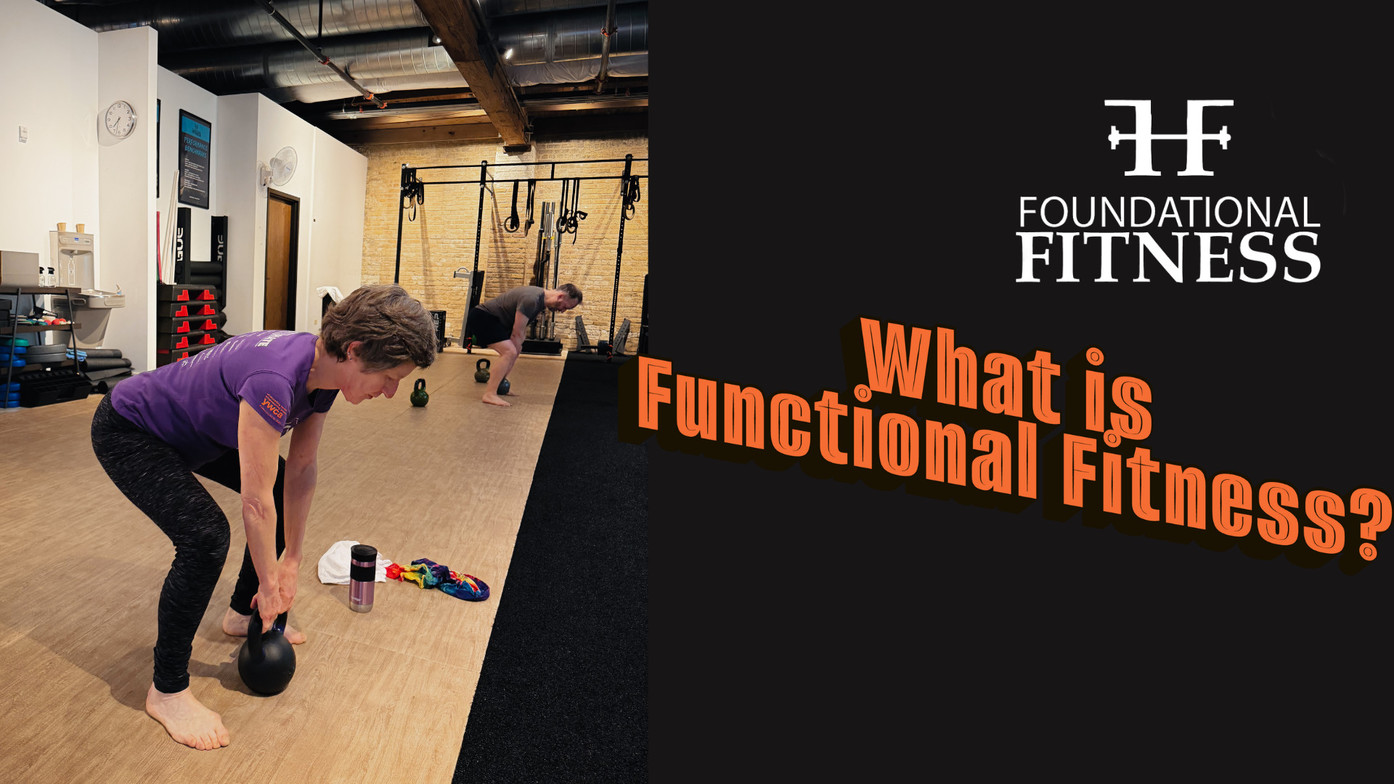
What is Functional Fitness?
Functional fitness is about training your body for the activities you perform in real life—whether that's lifting groceries, playing with your kids, climbing stairs, or hiking a challenging trail.
Think of it this way: rather than focus on making you look strong, functional fitness focuses on making you be strong in your everyday life.
Goals of Functional Fitness
Functional fitness exercises are based on movements that mimic common actions. They often involve multiple joints and muscle groups working together simultaneously.
Primary goals include:
- Coordination: Improving how well your body parts work together.
- Balance: Maintaining stability during movement and transitions.
- Agility: Changing direction quickly and efficiently.
- Strength: The ability to apply force against resistance.
- Endurance: The capacity to sustain an effort over time.
By training these qualities together, functional fitness helps your body move through simple and complex movements safely and efficiently, reducing the risk of injury and improving your quality of life.
If you’d like a broader look at how functional fitness supports strength, movement, and long-term health, our pillar page explores the full approach in more detail.
Functional Fitness for Real Life
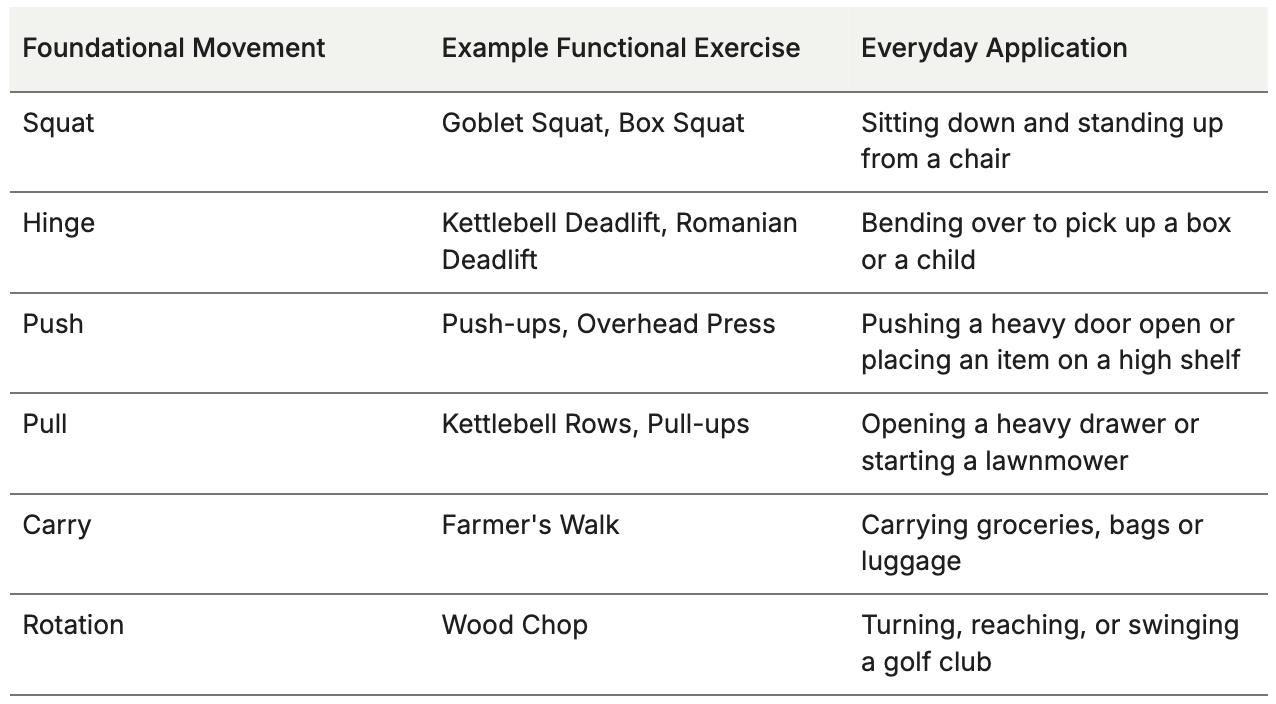
Foundational Movements of Functional Fitness
Functional training is rooted in a small number of essential movement patterns. These movements form the backbone of programs like Cornerstone Health’s Foundational Fitness classes, where proper mechanics, strength, and mobility are emphasized.
Who Should Try Functional Fitness?
Simply put: everyone.
Because functional fitness focuses on how people actually move, it is adaptable and beneficial for all ages and fitness levels.
- For the Older Adult: It maintains joint mobility and improves balance, reducing the risk of falls.
- For the Office Worker: It strengthens the core and improves posture, counteracting the effects of prolonged sitting.
- For the Athlete: Functional strength improves power, stability, and performance while helping prevent overuse injuries.
- For the Newcomer: It establishes a foundational competency that makes movement and exercise safer and more effective.
This inclusive, scalable approach is exactly why functional training is the cornerstone (pun intended) of Cornerstone Clinics’ Foundational Fitness program.
As your body changes over time, functional fitness plays a key role in maintaining strength and mobility. Here’s how it applies to functional fitness after 40.
How to Get Started with Functional Fitness
If you’re ready to start training for life, here are a few key principles to guide your routine:
Focus on form first. Quality movement matters. Proper coaching and feedback—like what you’ll find in small-group training—help prevent injury and build confidence.
Prioritize compound movements. Exercises like squats, lunges, presses, and carries give you the most benefit for your time.
Use a variety of tools. Kettlebells, medicine balls, resistance bands, and bodyweight exercises challenge stability and control.
Make it consistent. Aim for at least two functional fitness sessions per week to meet minimum health guidelines and see lasting results.
Functional Fitness at Cornerstone Health
Functional fitness is more than a workout—it’s an investment in long-term health, strength, and independence. At Cornerstone Health in Evanston our Foundational Fitness program applies these principles in a supportive, coached environment that meets you where you are and helps you progress safely.
If you’re curious how this approach might fit your goals, exploring our broader philosophy can be a helpful next step.
Read → Functional Fitness for Real Life
If you’d rather talk it through, a conversation with our team can help you decide what kind of support makes the most sense for you.
About the Author
Liz is a certified fitness professional at Cornerstone Health in Evanston, specializing in functional kettlebell training, foundational movement patterns, and corrective exercise. She is passionate about helping people move better and feel stronger in everyday life.