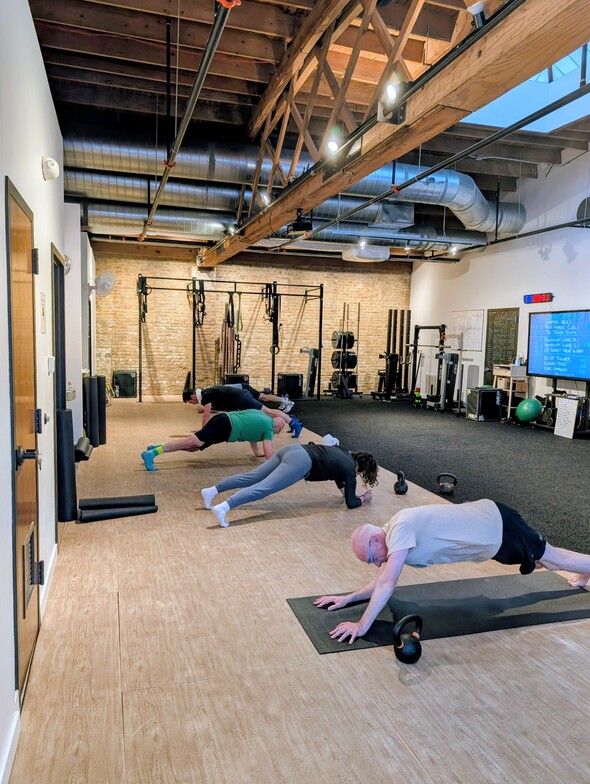
What Does It Really Mean to Be Fit?
For many people, fitness has traditionally been defined by numbers: how much you can lift, how fast you can run, or how many workouts you can squeeze into a week. While those metrics can be useful, they don’t always reflect what matters most—how well your body supports your everyday life.
Functional fitness shifts the focus away from aesthetics or isolated performance goals and toward something more practical: moving well, staying strong, and remaining capable in the activities you do every day.
At Cornerstone Health, functional fitness is not a trend or a buzzword. It’s a framework for helping people in Evanston and across the North Shore build strength, resilience, and confidence that carries over into real life.
If you’re curious how this approach looks in practice, you can learn more about our Foundational Fitness programs here.
What Is Functional Fitness?
Functional fitness is about training your body for the movements and demands you encounter outside the gym. That includes:
- Lifting and carrying objects
- Getting up and down from the floor
- Climbing stairs
- Reaching, rotating, pushing, and pulling
- Maintaining balance and control as you move
Rather than isolating individual muscles, functional fitness emphasizes integrated movement patterns that reflect how the body actually works. Strength, mobility, balance, and coordination are trained together—not in silos.
The goal isn’t just to look strong. It’s to be strong in ways that support daily life.
Functional Fitness vs. Traditional Strength Training
Traditional strength training often focuses on specific muscles and gym-based movements. This approach can be effective for building raw strength or muscle size, but it doesn’t always translate smoothly to real-world demands.
Functional fitness still includes strength training—but with a different lens. Exercises are chosen and progressed based on how they support:
- Efficient movement
- Joint health
- Load tolerance
- Long-term durability
Instead of asking, “How much weight can you lift?” functional fitness asks, “How well does this strength show up in your life?”
Why Functional Fitness Matters—Especially Long Term
As we age, the stakes change. Strength alone isn’t enough. We also need:
- Balance to reduce fall risk
- Mobility to move without restriction
- Coordination to handle unpredictable situations
- Confidence in our bodies
Functional fitness helps support:
- Injury prevention
- Bone density
- Joint health
- Independence and longevity
For many active adults on the North Shore—runners, cyclists, parents, professionals—functional fitness becomes the foundation that allows them to keep doing what they love without constantly managing pain or setbacks.
Who Is Functional Fitness For?
Functional fitness is not reserved for elite athletes or people recovering from injury. It’s for anyone who wants their training to support real life.
That includes:
- Busy professionals who want efficient, intentional workouts
- Active adults looking to stay resilient and capable
- Parents and caregivers who need strength that transfers to daily demands
- Adults over 40 who want to train with longevity in mind
- Individuals transitioning from physical therapy to independent fitness
At its core, functional fitness meets you where you are—and helps you move forward with purpose.
If you’re wondering whether this style of training fits your life, goals, or history, our Foundational Fitness programs are designed to adapt to the individual—not the other way around.
The Cornerstone Approach to Functional Fitness
What makes Cornerstone Health’s Foundational Fitness programs different is the clinical perspective behind the training.
Our approach is built on:
- Thoughtful assessment
- Individualized programming
- Attention to movement quality
- Progressive loading based on capacity—not guesswork
We bridge the gap between rehabilitation and performance by applying the same principles used in physical therapy—without staying stuck in a rehab mindset.
The result is training that feels challenging, appropriate, and sustainable.
Many people find this approach especially helpful when they want guidance, structure, and thoughtful progression—without feeling pushed or rushed.
Functional Fitness in a Clinical Setting
Not all functional fitness programs are the same. Without proper guidance, movement-based training can quickly become random or overly aggressive.
In a clinically informed environment:
- Exercises are chosen for a reason
- Progressions are intentional
- Limitations are respected without being reinforced
- Strength is built alongside control and awareness
This approach is especially valuable for individuals with a history of injury, recurring pain, or uncertainty about how to train safely.
Building Strength That Supports Your Life
Functional fitness isn’t about doing more for the sake of doing more. It’s about training smarter so your body supports the life you want to live—today and in the years ahead.
If this way of thinking about fitness resonates with you, a conversation with our team can be a helpful place to start.
At Cornerstone, Foundational Fitness is designed to help you move with confidence, build meaningful strength, and stay engaged in the activities that matter to you.
If you’re looking for a training approach that prioritizes real-life function, longevity, and thoughtful progression, functional fitness may be the missing piece.
If you’d like to learn more, explore our Foundational Fitness programs or reach out to start a conversation about what kind of support would be most helpful for you.
---------
About the Author
Liz is a certified fitness professional at Cornerstone Health in Evanston, specializing in functional kettlebell training, foundational movement patterns, and corrective exercise. She is passionate about helping people move better and feel stronger in everyday life.

Liz W Durham
Contact Me