Hip Degeneration Doesn’t Automatically Mean Hip Replacement
If you’ve been told you have “hip degeneration” or “arthritis,” it’s easy to assume the next step is a hip replacement. But imaging findings don't tell the full story. Many people with hip degeneration can still improve pain, walking, and function with the right non-surgical plan—especially when care focuses on why the joint is being overloaded and what can be done to change that.
At Cornerstone Health, we help people across Evanston and Chicago’s North Shore get clarity on hip pain and degeneration with a one-to-one evaluation and an individualized plan built around movement, mechanics, and tissue capacity—not just a report.
What hip degeneration really means
Hip degeneration (often called hip osteoarthritis) generally means the tissues in and around the joint are breaking down faster than they’re currently being repaired. That can involve cartilage wear, changes in the bone surface, and irritation in surrounding structures. Often new bone (osteophytes) form as an attempt for your body to lock down or stabilze the irritated hip.
Degeneration isn’t a single switch that flips from “healthy” to “degenerated”. It’s an ongoing process. And processes can often be slowed, stabilized, and improved—especially when the drivers of irritation and overload are identified early.
A helpful way to think about it:
Degeneration reflects an imbalance between breakdown and repair. Non-surgical care aims to shift that balance back toward repair by improving joint mechanics, restoring motion, and building the strength and control your hip needs to tolerate your life.
Why your hip hurts (even if the X-ray “isn’t that bad”)
Hip pain is usually less about one perfect diagnosis and more about how your hip is moving and loading day to day. Two people can have similar imaging findings and feel completely different. That’s because pain is influenced by things imaging can’t measure well, including movement strategy, stiffness patterns, strength deficits, and compensation.
Some of the most common drivers we see include reduced hip rotation and extension, tightness in the hip capsule, weakness or poor control in the glutes and trunk, and movement habits that repeatedly pinch or compress irritated tissues.
Why hip pain often comes with back tightness or a limp
The hip is a central “power joint.” When it loses range of motion, your body finds another way to do the job. That often means borrowing motion from the low back and pelvis, shortening your stride, turning your foot out, or shifting away from the painful side.
You might not notice a limp at first, but it often shows up on video or in subtle changes like difficulty with stairs, getting out of the car, or walking longer distances. Over time, these compensations can make back discomfort feel like the main issue—when the hip is actually the driver.
The big misconception: “Degeneration means I need surgery.”
Sometimes surgery is the right tool—especially when quality of life is severely limited and conservative care has been fully tried. But degeneration alone doesn’t automatically equal replacement.
A better question than “Do I need a new hip?” is:
“Why is my hip irritated and overloaded, and can we change the forces driving that?”
When we can restore motion, improve joint mechanics, and rebuild load tolerance, many patients find they can return to daily activities—and often the sports or workouts they care about—with less pain and more confidence.
Non-surgical treatment options that can help hip degeneration
Non-surgical hip care works best when it’s not generic. Random stretching or “a few exercises” often isn’t enough if the real problem is how the hip is moving, how the joint is being loaded, or how the body is compensating.
A strong conservative plan often includes:
1) A true movement-based evaluation (not just “where it hurts”)
The goal is to identify the pattern: what motion is missing, what triggers symptoms, and how your body is compensating. This typically includes assessing hip rotation and extension, strength and motor control, gait mechanics, and functional movements like squatting, stairs, or sport-specific tasks.
2) Restoring the motion your hip needs
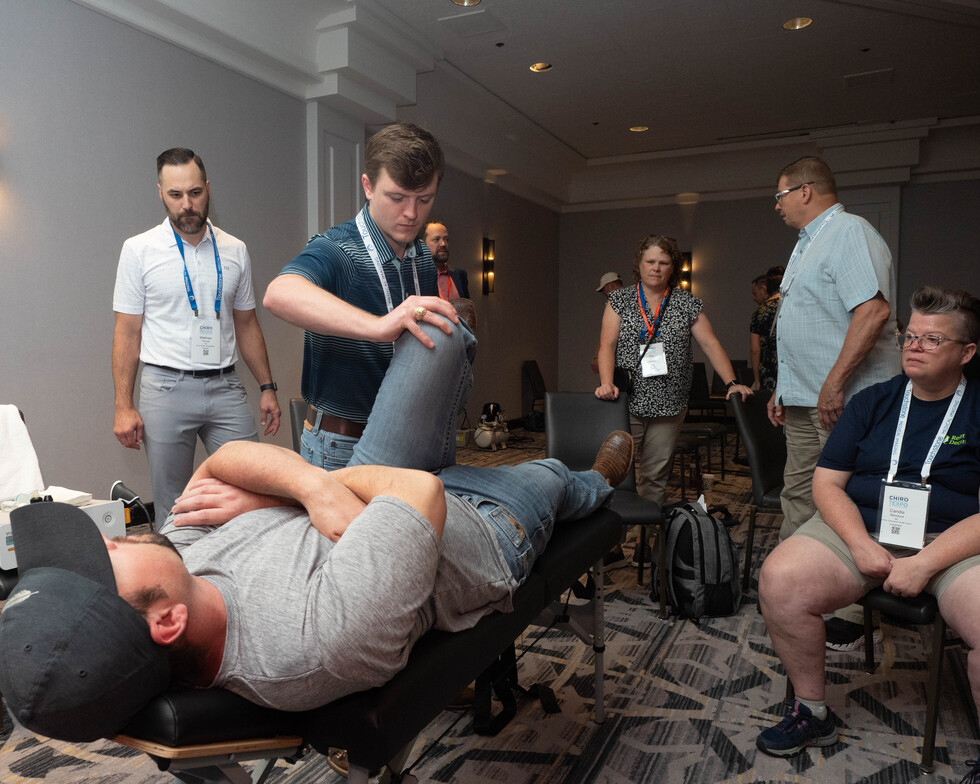
Hip degeneration and impingement patterns often come with lost internal rotation, limited extension, and a stiff capsule. Hands-on mobilization, targeted mobility work, and precise exercise selection can help restore usable range of motion—without flaring symptoms.
3) Rebuilding strength and control so the hip tolerates load
The hip doesn’t just need strength; it needs the right strength in the right sequence. That includes deep hip stabilizers, glutes, and trunk control so the joint can stay centered and share load efficiently during walking, stairs, and athletic tasks.
4) Gait and movement retraining (the missing piece for many people)
If your hip pain changed how you walk, you may be reinforcing irritation every day without realizing it. Small changes in stride, pelvic control, and foot position can dramatically change joint stress over time—especially when paired with strength and mobility work.
5) Advanced options when appropriate
For select patients, advanced technologies such as shockwave therapy may be considered, and injection-based options like PRP or prolotherapy may be appropriate depending on presentation and goals. These aren’t “magic fixes,” but they can be helpful tools when used within the right plan and matched to the right person.
When to seek a second opinion for hip pain
Consider a second opinion if your hip pain has lasted more than a few weeks, keeps returning, causes a limp, limits walking or sleep, or you’ve been told “it’s just arthritis” without a clear plan. You deserve an evaluation that explains what’s driving your symptoms and provides an actionable path forward.
A simple self-check: signs your hip may be driving the problem
If you notice pain in the groin or side hip, stiffness after sitting, trouble with stairs, reduced stride length, discomfort putting on shoes/socks, or back tightness that worsens after walking, your hip mechanics and range of motion may be a key factor—regardless of what imaging shows.
What to do next
If you’re dealing with hip pain, stiffness, impingement, a labral tear, or hip arthritis/degeneration, the next best step is often a thorough, one-to-one evaluation that looks beyond the report and identifies the real drivers.
Cornerstone Health provides non-surgical hip pain care designed to restore motion, improve walking mechanics, and rebuild long-term load tolerance—without rushing you toward surgery.

Dr. Benjamin Fergus
Contact Me