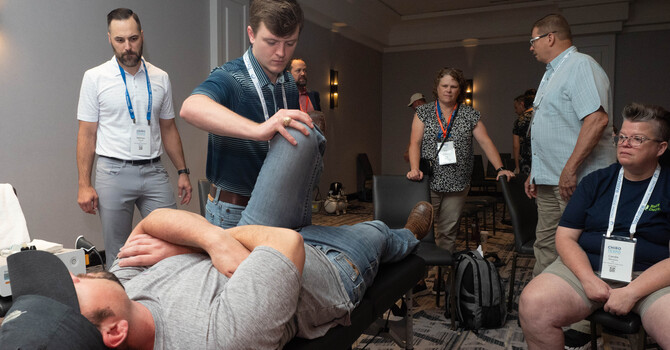
Hip pain can quietly change how you walk, sit, exercise, and sleep—and it often shows up as low back tightness, knee strain, or a growing limp. At Cornerstone Health, we specialize in the non-surgical management of hip pain, including hip stiffness, labral tears, hip impingement (FAI), and hip arthritis or degeneration. If you’ve been putting off a second opinion, we’ll give you a thorough, one-to-one evaluation and a clear plan forward.
What hip degeneration really means (and why surgery isn’t automatic)
If imaging shows “degeneration” or “arthritis,” it doesn’t automatically mean you need a hip replacement. Degeneration often means the rate of tissue breakdown is exceeding your body’s current ability to repair. Our job is to identify why that balance has shifted—mobility loss, joint mechanics, load tolerance, movement habits, or compensation patterns—and help shift it back toward repair, capacity, and function using conservative, evidence-informed care.
Common causes of hip pain we see
Many hip pain cases start as muscle tightness or incomplete recovery after a strain, a deeper soft-tissue injury, or months of prolonged sitting. When the hip loses range of motion, the connective tissue capsule around the joint can tighten as well, further limiting movement and increasing stress through the pelvis and low back. In other cases, hip impingement (cam or pincer deformities) can reduce clearance in the joint and irritate the labrum, while osteoarthritis can change how the joint tolerates load. Regardless of the label—labral tear, FAI, hip arthritis, or hip degeneration—our focus is the same: restore better motion, improve how the joint is loaded, and help you move with less irritation.
Why hip pain often comes with back pain or a limp
The hip is the transfer point for force from the ground into the pelvis and upper body. When hip motion is restricted, the body borrows movement from the low back, knees, or foot and changes gait to protect the joint. That’s why many people notice back tightness, reduced stride length, difficulty with stairs, and a limp that’s obvious on video even if it feels subtle day-to-day. These patterns matter because they can keep the hip irritated and slow recovery unless they’re addressed directly.
Our evaluation: clarity first
Your visit is designed to replace uncertainty with a clear explanation and plan. We assess hip range of motion (especially rotation and extension), strength and control of the hip and trunk, impingement patterns, and the specific movements that trigger symptoms. We also analyze gait and functional tasks like squatting, stairs, or sport-specific movement when appropriate. You’ll leave knowing what’s driving your symptoms and what to do next.
Do you have hip arthritis, hip impingement, or hip degeneration?
Many chronic hip pain and hip degeneration cases can still improve or be overcome using our unique evaluation and rehabilitation system. Your plan may be as simple as the right mobility and strengthening progression paired with hands-on mobilization to restore motion and reduce protective stiffness. When needed, care becomes more advanced and may include movement retraining for walking and daily activities, progressive load management, and treatment strategies aimed at improving tissue tolerance over time. For select cases, we also use advanced technologies such as shockwave therapy or injection-based options that may be appropriate, including prolotherapy, PRP, or other stem-cell approaches when clinically indicated. Every patient is different, so we match the plan to your presentation, goals, and timeline.
Can you recover from hip arthritis?
While each case is unique, successful conservative hip care typically improves range of motion, reduces pain with walking and stairs, restores gait quality, improved sleep comfort, and improves strength and control so the hip tolerates daily and athletic load with less irritation. Your body is in a constant state of healing, and your hip joint is capable of healing as well. For those with the most advanced degenerative changes where surgery may still be reccomended, your care at Cornerstone will help strengthen your leg and prepare you for the best possible outcomes and fast recovery.
Local care for Evanston and the North Shore
Cornerstone Health serves patients across Evanston, Wilmette, Winnetka, and Chicago’s North Shore. If you’re looking for a hip pain expert who prioritizes non-surgical treatment for hip arthritis and hip degeneration, our approach is built around one-to-one assessment, movement analysis, and a personalized plan you can actually follow.
